
In today’s complex healthcare environment, providers face growing administrative pressure alongside rising patient demand. Mental health billing solutions play a vital role in helping behavioral health practices manage claims, reduce denials, and maintain steady cash flow. When billing processes are aligned with regulatory standards and payer requirements, providers can focus more on patient care and less on paperwork.
Understanding Medical Billing in Mental and Behavioral Health
Medical billing for mental health services is different from traditional healthcare billing. It involves unique coding structures, session-based claims, time tracking, and frequent authorization requirements. Providers must comply with payer-specific rules, state regulations, and federal guidelines while ensuring accurate documentation.
Because behavioral health services often include therapy sessions, psychiatric evaluations, and ongoing treatment plans, billing errors can easily occur. Even small mistakes may lead to delayed reimbursements or denied claims, which can significantly affect a practice’s revenue cycle.
Why Mental Health Billing Solutions Matter
Mental health billing solutions are designed to address the specific challenges associated with behavioral health medical billing. They streamline administrative workflows, improve coding accuracy, and support compliance with insurance requirements. By automating repetitive tasks, these systems help reduce human error and improve turnaround times for claims processing.
In addition, efficient billing support enhances financial transparency. Providers can track outstanding claims, monitor reimbursement trends, and identify issues before they impact overall revenue. This level of control is especially important for practices offering multiple therapy modalities or working with diverse insurance networks.
Key Features That Support Accurate Medical Billing
Modern mental health billing solutions integrate technology with best billing practices to ensure smoother operations. Some of the most valuable features include:
- Automated eligibility verification to confirm coverage before services are rendered
- Accurate CPT and ICD coding tailored to behavioral health services
- Claim scrubbing tools to identify errors prior to submission
- Real-time reporting and analytics for revenue tracking
- Secure data handling to meet HIPAA compliance standards
These features collectively reduce administrative burden and improve reimbursement rates without compromising patient confidentiality.
Common Challenges in Behavioral Health Billing
Behavioral health providers often face recurring issues such as denied claims, underpayments, and delayed reimbursements. These problems may arise from incorrect coding, missing documentation, or frequent changes in payer policies.
Using structured workflows supported by mental health billing solutions helps mitigate these challenges. Practices can maintain consistency in documentation and stay aligned with updated payer rules. As a result, fewer claims are rejected, and cash flow becomes more predictable.
Benefits of Outsourced and Technology-Driven Billing
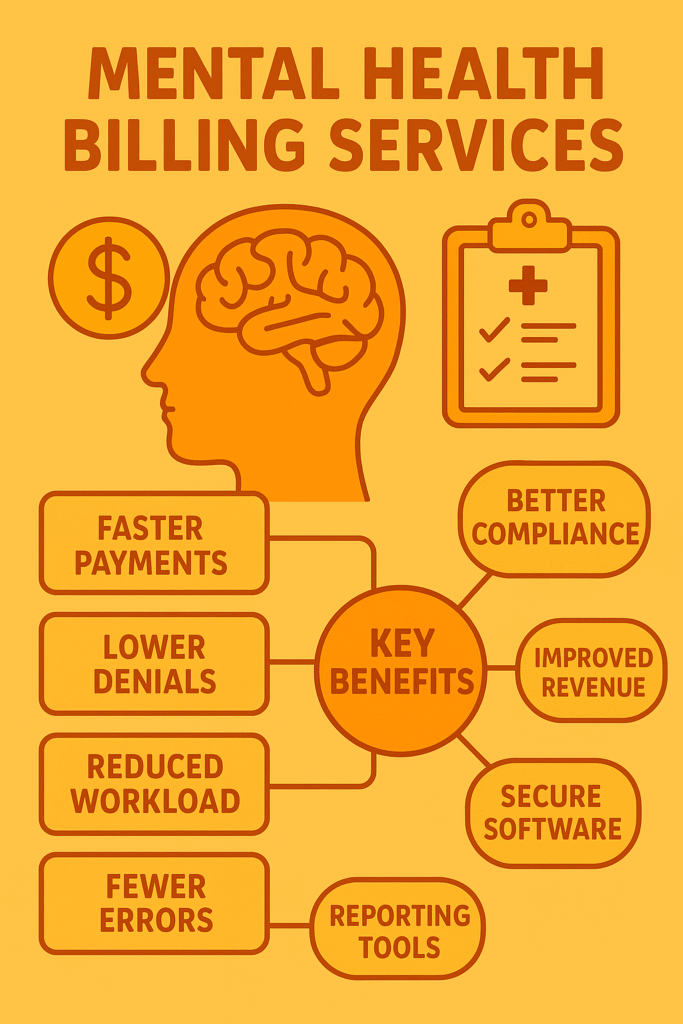
Many practices choose to outsource or digitally enhance their billing processes to improve efficiency. With advanced mental health billing solutions, providers gain access to specialized expertise and scalable systems without expanding internal staff.
This approach offers better claim follow-up, faster payment cycles, and reduced overhead costs. It also allows clinicians and administrators to focus on delivering quality mental health services rather than managing complex billing tasks.
Quick Overview of Billing Support Areas
| Billing Area | Purpose |
|---|---|
| Eligibility Check | Coverage confirmation |
| Medical Coding | Accurate service codes |
| Claim Submission | Timely filing |
| Denial Management | Error resolution |
| Payment Posting | Revenue tracking |
| Compliance Support | Regulatory alignment |
Choosing the Right Approach for Your Practice
Selecting the right billing strategy requires evaluating practice size, patient volume, and payer mix. The right mental health billing solutions should align with both clinical goals and financial objectives. Flexibility, transparency, and strong reporting capabilities are essential factors to consider.
When implemented correctly, these systems contribute to long-term operational stability and support sustainable growth for behavioral health practices.
FAQs
What are mental health billing solutions in medical billing?
Mental health billing solutions refer to specialized systems and services that manage coding, claim submission, reimbursement tracking, and compliance for behavioral health providers.
How do these solutions improve revenue cycles?
They reduce errors, speed up claim processing, and ensure consistent follow-ups on unpaid or denied claims, resulting in improved cash flow.
Are these solutions suitable for small practices?
Yes, they can be scaled to meet the needs of solo practitioners, group practices, and large behavioral health organizations.
Do they support insurance and self-pay models?
Most modern systems are designed to handle both insurance-based billing and patient self-pay workflows efficiently.
Is compliance managed through billing solutions?
Yes, they help practices stay compliant with HIPAA guidelines and payer-specific regulations.
Can mental health billing solutions adapt to changing regulations?
Reputable solutions are regularly updated to reflect changes in coding standards, insurance policies, and healthcare regulations.